

How CBD Fits Into a Muscle Recovery Routine After Hard Training
Anyone who trains hard enough to actually need recovery already knows the drill: ice, stretch, sleep, repeat. CBD has worked its way into that routine for a lot of athletes over the past few years, but it’s worth being honest about what it’s actually doing there and what it isn’t.
What “Recovery” Really Means
Muscle soreness after a hard session, the kind that shows up 24 to 48 hours later, known as delayed onset muscle soreness (DOMS), comes from microscopic damage to muscle fibers and the inflammatory response that follows. That inflammation isn’t the enemy. It’s part of how the tissue rebuilds stronger. The goal isn’t to shut it off completely; it’s to manage the discomfort enough that it doesn’t derail the next session.
This is where CBD gets talked about a lot, sometimes with more confidence than the evidence supports. CBD interacts with the body’s endocannabinoid system, which plays a role in regulating pain signaling and inflammatory response. Some research suggests it may help modulate that inflammatory cascade, which is why it’s become a common addition to post-training routines. That said, human clinical research on CBD specifically for exercise-induced muscle soreness is still limited compared to, say, the decades of data behind ibuprofen. What exists is promising but not conclusive, and anyone telling you otherwise is overselling it.
Where CBD Actually Fits
Most athletes using CBD for recovery are applying it in one of two ways: topically, directly on the sore area, or orally through a tincture or tablet for a more systemic effect.
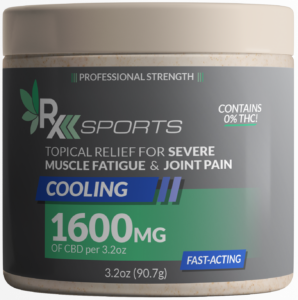
Topicals like Rx Sports Blue Majic(tm) (cooling topical) or Red Effect (warming topical) work locally, they don’t need to travel through the bloodstream to reach a joint or muscle group, which is part of why people reach for them right after training, while they’re still stretching or icing. A wax-based topical that includes CBD alongside other plant compounds like arnica and menthol or capsaicin tends to stick around longer through sweat than a lighter lotion, which matters if you’re applying it before a session rather than after.
Tablets and tinctures work differently. Because they’re absorbed into the bloodstream, they affect the whole system rather than one spot, which is part of why they’re often paired with sleep or general inflammation management rather than a specific joint.
Timing Matters More Than People Think
A lot of people apply CBD once, right after a brutal leg day, and expect it to undo the damage. That’s not really how it works. Consistency tends to matter more than any single application. Using a topical regularly through a training block, rather than only reaching for it on the worst days, is closer to how the people who report the best results actually use it.
What The Research Says, Plainly
A 2020 review in Sports Medicine looked at cannabinoids and exercise recovery and found early evidence that CBD might reduce inflammatory markers and support recovery, but the authors were clear that more controlled human trials were needed before drawing firm conclusions. That’s still roughly where things stand. The interest is real, the anecdotal reports are widespread, and the underlying biology is plausible, but if you’re looking for a definitive, peer-reviewed answer on whether CBD speeds up muscle recovery in humans, it doesn’t exist yet in the way it does for something like protein timing or sleep.
The Bigger Picture
None of this means CBD is snake oil. It means it should sit inside a recovery routine, not replace one. Sleep, hydration, protein intake, and actual rest days do more for recovery than any topical or tincture ever will. CBD is a supporting tool, not a shortcut, which is honestly true of most things in a recovery stack.
If you’re training hard enough that soreness is limiting how you move the next day, that’s worth paying attention to regardless of what you’re using to manage it. A CBD topical applied to the specific area, combined with the basics you already know work, is a reasonable thing to try. Just don’t expect it to be the whole answer.




No comment yet, add your voice below!