What Is CBDA, and Why It Shows Up Next to CBD in Rx Sports Tablets

What Is CBDA, and Why It Shows Up Next to CBD in Rx Sports Tablets

CBD gets all the attention, but if you’ve looked closely at the ingredient list on the Rx Sports CBD+CBDA Pain Relief Tablets, you’ve probably noticed a second compound sitting right next to it: CBDA. It’s not a typo, and it’s not filler. It’s a distinct cannabinoid with its own role.

CBDA is what CBD looks like before it’s activated

Cannabidiolic acid, or CBDA, is the raw, acidic form of cannabidiol found in the hemp plant before it’s exposed to heat. When hemp is heated, through a process called decarboxylation, CBDA converts into CBD. So in a sense, CBDA is CBD’s precursor, but that doesn’t mean it’s just an inactive ingredient waiting to become useful. Research over the past several years has increasingly shown CBDA has its own independent biological activity, separate from what CBD does.

What makes CBDA different

One of the more interesting findings involves CBDA’s interaction with the COX-2 enzyme, the same enzyme that NSAIDs like ibuprofen and aspirin target to reduce inflammation and pain. Early research suggests CBDA may inhibit COX-2 activity in a way that’s mechanistically similar to how conventional anti-inflammatories work, but through a plant-based compound rather than a synthetic drug. That’s a meaningfully different mechanism than CBD’s primary interaction with the endocannabinoid system.

This matters because it means a product combining CBD and CBDA isn’t just doubling up on the same effect twice. It’s potentially hitting inflammation and pain through two different pathways at once, one through the endocannabinoid system via CBD, and one through a COX-2-adjacent pathway via CBDA. Whether that translates into a meaningfully better outcome for any individual person is something existing research suggests but hasn’t fully proven with large-scale human trials. The mechanistic case is genuinely interesting; the clinical evidence base is still developing.

Why this hasn’t been common until recently

CBDA is chemically less stable than CBD, it degrades relatively easily with heat and light, which is part of why most CBD products historically didn’t bother preserving it. Formulating a shelf-stable product that keeps meaningful CBDA content intact takes more careful processing than a standard full- or broad-spectrum CBD extract. That’s a large part of why CBD+CBDA combination products are still a relatively newer category, even though CBDA itself has always been present in raw hemp.

What’s actually in the Rx Sports tablets

Each CBD+CBDA Pain Relief Tablet delivers 100mg of CBD alongside 10mg of CBDA, formulated with a proprietary terpene profile plus palmitoylethanolamide (PEA), curcumin, green tea polyphenols, and omega-3 fatty acids. PEA is worth a mention on its own, it’s a fatty acid amide the body produces naturally, and it’s been studied since the late 1970s for its own anti-inflammatory and analgesic properties, working through pathways connected to but distinct from the endocannabinoid system. Curcumin, the active compound in turmeric, has a long research history around inflammation as well, though its bioavailability on its own is famously poor, which is part of why it’s typically paired with other compounds rather than taken alone.

The takeaway

CBDA isn’t a marketing add-on. It’s a distinct compound with a genuinely different mechanism of action than CBD, and pairing the two is a reasonable, evidence-informed approach to a multi-cannabinoid product, even if the research base, like most of cannabinoid science, is still catching up to the pace of consumer interest. If you’re choosing between a CBD-only product and one that includes CBDA, understanding what each compound is actually doing is worth more than trusting the label alone.

Broad-Spectrum vs. Full-Spectrum CBD: Which One Should Athletes Choose

Broad-Spectrum vs. Full-Spectrum CBD: Which One Should Athletes Choose

Walk into any CBD conversation and someone will eventually throw out “broad-spectrum” or “full-spectrum” like you’re supposed to already know the difference. Most people don’t, and for athletes specifically, the distinction actually matters more than it does for the general population.

The difference, without the marketing spin

Hemp contains dozens of compounds beyond CBD. Other cannabinoids like CBG and CBN, terpenes, and flavonoids. THC is one of those cannabinoids, just present in very small amounts in legally compliant hemp products (under 0.3% by federal definition).

Full-spectrum CBD keeps the entire compound profile intact, including trace THC. Broad-spectrum CBD goes through an extra processing step to strip out the THC specifically, while keeping the other cannabinoids and terpenes. CBD isolate strips everything except CBD itself, leaving a single, pure compound.

The “entourage effect…” briefly

The theory behind full- and broad-spectrum products is something researchers call the entourage effect, the idea that cannabinoids and terpenes work better together than any one of them does in isolation. There’s real scientific interest in this idea, and some preclinical research supports synergistic effects between cannabinoids. It’s not settled science with the kind of rigorous human trials that would make it a slam-dunk claim, but it’s also not a marketing myth invented out of nothing.

Why this matters more for athletes specifically

For most consumers, the broad-spectrum-versus-full-spectrum choice is about preference and how a product makes them feel. For athletes subject to drug testing, it can be the difference between a clean test and a career problem.

WADA removed CBD from its Prohibited List in 2018, and that status hasn’t changed under the 2026 Prohibited List. THC, however, remains prohibited in-competition, with a urinary threshold of 150 ng/mL. Full-spectrum products, even at legal trace-THC levels, carry a real, if generally low, risk of accumulating detectable THC with regular use, especially at higher daily doses over weeks. Broad-spectrum products are formulated specifically to remove that risk while preserving most of the entourage-effect compounds.

This is exactly why Rx Sports formulates its topicals, tinctures, and tablets as broad-spectrum: the goal is giving athletes the benefit of the fuller cannabinoid and terpene profile without the THC exposure that full-spectrum products carry. If you’re not subject to any testing, full-spectrum isn’t inherently dangerous. It’s a legitimate, legal product category. It’s just a different risk calculation depending on who you are and what’s on the line.

What to actually check on a label

“Broad-spectrum” on a label isn’t a guarantee by itself. The only way to know what’s actually in a bottle is a current Certificate of Analysis (COA) from a third-party lab, showing the full cannabinoid breakdown and confirming non-detectable or trace THC levels. Reputable brands post these publicly rather than making you ask for them. If a company can’t produce a recent COA for the specific batch you’re buying, that’s worth treating as a red flag regardless of what the label claims.

The practical answer

If you compete under any anti-doping code, NCAA, WADA, or a similar body , broad-spectrum or isolate products with verified non-detectable THC are the lower-risk choice, full stop. If you’re not tested and you’re mainly optimizing for how the product works for you personally, full-spectrum is worth trying, since some people do report a difference. Either way, the label claim matters less than the lab report backing it up.

Cooling or Warming: Which CBD Topical Fits Your Training Day

Cooling or Warming: Which CBD Topical Fits Your Training Day

Blue Majic or Red Effect? Cooling or warming? It’s a smaller decision than a lot of people treat it as, but there’s an actual logic to it once you know what each one is doing.

The core difference isn’t the CBD

Both formulas deliver the same 500mg of broad-spectrum CBD per ounce. The difference between a cooling and a warming topical comes down to the secondary active ingredients layered in alongside the CBD — menthol-forward compounds for a cooling sensation, capsaicin for a warming one. Same cannabinoid foundation, different sensory experience, and slightly different practical use cases.

Cooling: built for before and during

A cooling topical produces a sensation similar to menthol-based products most people already know — the immediate, slightly numbing cool feeling on contact. That sensation comes from menthol activating a different temperature-sensitive receptor (TRPM8) than the one warming products activate, which is why the two feel so distinctly different even though both are technically “counterirritants” working on the nervous system’s pain-gating mechanism.

Because the cooling sensation is generally less distracting during movement, this is the more common choice for pre-training application, or for use during a session on a joint or muscle group that’s already flaring up. It’s also frequently preferred for acute, sharper discomfort — a tweaked muscle mid-session, an ankle that’s starting to bother you on a run — where an intense sensory distraction isn’t ideal.


Warming: built for after and on rest days

A warming topical uses capsaicin to activate TRPV1 receptors, producing genuine heat on the skin. This tends to work better for deep, stiff, chronic-feeling soreness — the kind you get the day after a heavy leg session, or in a joint that’s been bothering you for weeks rather than hours. The warming sensation itself can feel genuinely relieving for that specific kind of stiffness in a way a cooling sensation doesn’t quite replicate.

Because the warming sensation is more noticeable and can be a bit much mid-workout, this is generally the better choice for post-training or rest-day use, when you’re not trying to focus on performance and the sensory effect isn’t competing with anything.

Does one work “better”

Not inherently — this comes down more to personal preference and the specific type of discomfort than one formula being objectively superior. Some people find cooling sensations more soothing regardless of context; others find warming products more satisfying for deep muscle tightness specifically. There’s no research suggesting one produces meaningfully different anti-inflammatory outcomes from the CBD itself, since that mechanism is identical in both. The difference is entirely in the secondary ingredient and the sensory experience it creates.

A practical way to decide

If you’re not sure where to start, match it to timing rather than trying to guess a preference in the abstract. Training today and want something you can apply beforehand without it being distracting: cooling. Sore from yesterday and looking for something to use tonight or on a rest day: warming. A lot of people who use both regularly end up keeping one of each — cooling for pre- and mid-training use, warming for evenings and rest days — rather than committing to just one.

The bottom line

The CBD dose and the underlying benefit case are the same either way. What you’re actually choosing between is a sensory experience and a use-case fit, not a difference in effectiveness. Try both if you’re genuinely unsure — plenty of people do, and there’s no reason not to have both in rotation depending on the day.

Introducing Kaaliyah: A Warming Topical Built for Deep Muscle Relief

Introducing Kaaliyah: A Warming Topical Built for Deep Muscle Relief

Kaaliyah is Rx Sports’ warming topical line, and if you’ve already used Red Effect, the natural first question is why a second warming product exists at all. It’s a fair question, and the answer comes down to concentration and format rather than a completely different approach.

What Kaaliyah actually is

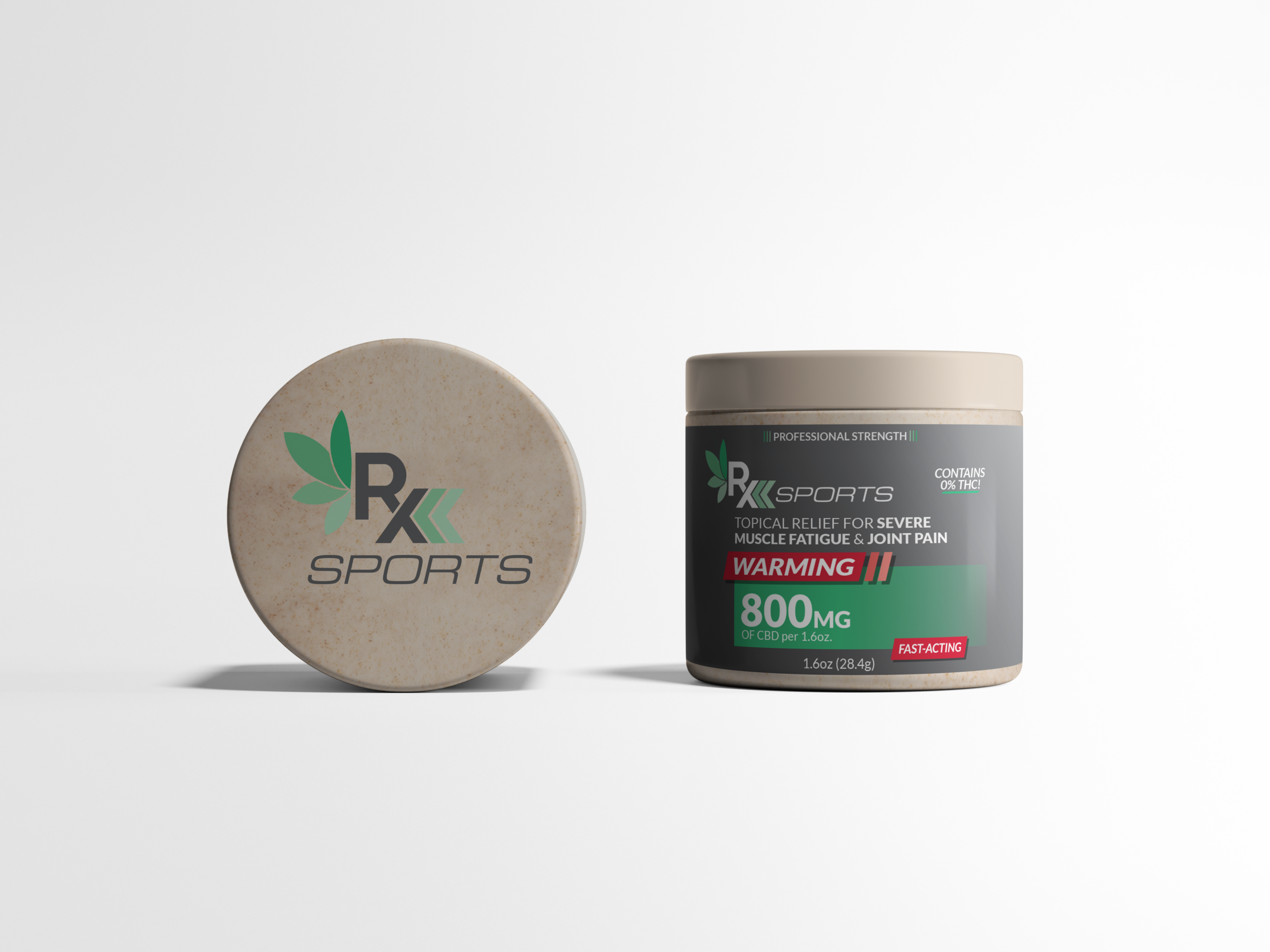
Kaaliyah is a professional-strength CBD warming topical, delivering the same 500mg-per-ounce broad-spectrum CBD concentration found across the Rx Sports topical line, combined with capsaicin, menthol, and a proprietary blend of plant compounds in a wax-based shea butter formula. It’s available in a 2oz size, positioned as a higher-volume option for people using a warming topical regularly and in larger amounts than a single 250mg or 1.6oz product covers comfortably.

Why the formula is broad-spectrum

Every Rx Sports and Kaaliyah topical is formulated as broad-spectrum CBD rather than full-spectrum, meaning the THC has been processed out while other cannabinoids and terpenes are retained. For a topical specifically, this isn’t primarily an anti-doping consideration the way it is for an ingestible product, topical CBD application generally carries negligible systemic absorption compared to a tincture or tablet. It’s more about consistency and formulation control: broad-spectrum extraction allows for a more predictable, standardized cannabinoid profile batch to batch.

Where the warming sensation comes from

The warmth isn’t from the CBD, it’s from capsaicin, the same compound that gives chili peppers their heat. Capsaicin binds to TRPV1 receptors on sensory nerve endings, producing a genuine warming sensation and, with repeated application, potentially reducing local pain signaling by depleting substance P, a neurotransmitter involved in transmitting pain to the brain. This is a well-established mechanism in topical pain treatment generally, independent of CBD, which is part of why capsaicin shows up in warming products across the pain-relief category, not just cannabinoid-based ones.

What it’s formulated for

Kaaliyah is built around the same use case as Rx Sports’ broader warming category: deep, stiff muscle and joint discomfort, the kind that shows up after a heavy training session or accumulates over a demanding week, rather than a sharp, acute injury. It’s not designed as a pre-workout product; the pronounced warming sensation is generally better suited to post-training or rest-day application, when a strong sensory effect on the skin isn’t competing with your focus during a workout.

How it differs from Rx Sports Red Effect in practice

Both products share the same core CBD concentration and general formulation philosophy. The distinction is largely about size and positioning. Kaaliyah’s 2oz option are aimed at people who go through a topical faster or prefer applying more generously per use, while Red Effect’s range includes a smaller 250mg option for people testing the format or using it more sparingly. Neither is objectively “stronger” in terms of CBD concentration per application; the difference is in volume and how the product fits into different usage patterns.

Getting started

If you’re new to warming topicals generally, apply generously to the affected area, up to two to three times per day, and give it consistent use over several days rather than judging it off a single application. As with any topical in this category: avoid the eyes and mouth, don’t apply to broken skin, wash your hands afterward, and it’s not recommended for children under 12. If irritation develops, discontinue use and check with a physician.

Kaaliyah isn’t a departure from what Rx Sports already does well, it’s a more concentrated option within the same warming category, for people whose usage patterns call for it.

CBD Topical or Tincture? How to Pick the Right Format for Recovery

Publish blog post: CBD Topical or Tincture? How to Pick the Right Format for Recovery

This comes up constantly: someone’s ready to try CBD for training recovery and has no idea whether to grab a topical or a tincture. The honest answer is it depends on what problem you’re actually trying to solve, and the two aren’t really interchangeable.

How they’re different at the most basic level

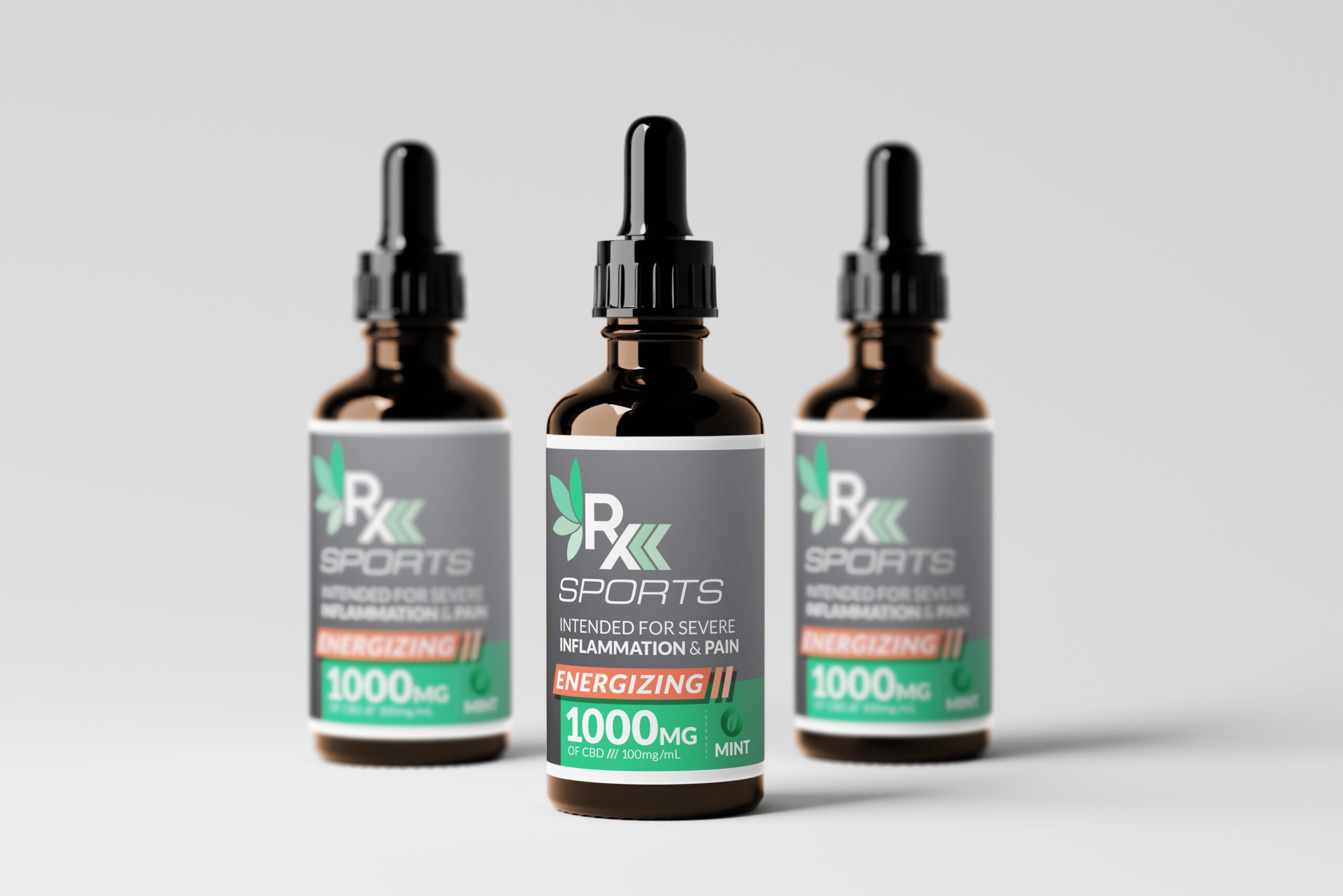
A topical, like Blue Majic or Red Effect, is applied directly to the skin over a specific muscle or joint. It works locally. The CBD and other active compounds interact with cannabinoid receptors in the skin and surrounding tissue without needing to enter the bloodstream in meaningful amounts.

A tincture is taken sublingually, held under the tongue for absorption through the mucous membranes before swallowing. It enters the bloodstream and has a systemic effect, meaning it’s working throughout the body rather than in one localized spot.

When a topical makes more sense

If you’ve got a specific, identifiable sore spot, a tight lower back after deadlifts, achy knees after a long run, shoulders wrecked from overhead work, a topical is the more direct tool. You’re putting the product exactly where the discomfort is, and formulations built with a wax-based or shea butter base tend to stay put through sweat rather than sliding off within twenty minutes, which matters if you’re applying before or during a session rather than only after.

Cooling topicals, like Blue Majic, are generally preferred by people who want a topical they can use before or during activity without the sensation being distracting. They tend to feel less intense on the skin. Warming topicals, like Red Effect, use ingredients like capsaicin that create a warming sensation some people find more effective for deep, stiff muscle tightness, and are typically better suited to post-training or rest-day use, when a stronger sensory effect isn’t going to interfere with a workout.

Can you use both

Yes, and a lot of people do. Applying a topical to a specific problem area while also taking a tincture as part of a daily routine isn’t overkill. They’re addressing different things. The topical is targeted; the tincture is systemic. Using them together isn’t redundant any more than icing a specific joint while also getting enough sleep would be redundant.

What actually determines which one works better for you

This is where individual variation matters more than any general rule. Skin sensitivity, how localized your soreness is, whether you’re dealing with one joint or whole-body fatigue, and honestly just personal preference all play a role. Some people find topicals more satisfying because the effect feels immediate and tactile. Others prefer tinctures because they don’t want to deal with applying and rubbing in a product, especially post-workout when they’d rather shower and move on.

The practical starting point

If you’re new to CBD and trying to figure out where to start, match the format to the problem. Localized, specific soreness: start with a topical. General recovery, sleep support, or systemic inflammation management: start with a tincture. If you’re dealing with both, there’s no rule against using both, just don’t expect either one to be a complete substitute for the basics of actual recovery, which still come down to sleep, hydration, and giving your body time to adapt.

Rx Sports Named a Company to Watch by Virginia Tech’s Hokie 100

Virginia Tech’s Hokie 100 program honors Rx Sports for its rapid growth, rising leadership, and strong outlook, with the certificate presented August 2 in Alexandria, VA.

Alexandria, VA — September 6, 2026 — Rx Sports, a CBD pain management and recovery company serving athletes and active individuals, was recognized last week as a company to watch at the Hokie 100 networking event, held in Alexandria, Virginia. The recognition cited Rx Sports’ “exceptional growth, emerging leadership, and significant potential for future success.”

The certificate of recognition was presented and signed by Brandy Salmon, Vice President of Innovations and Partnerships at Virginia Tech.

The Hokie 100 event brings together fast-growing, Virginia Tech-affiliated companies to celebrate their progress and connect them with a broader network of alumni, innovators, and partners. Being named among this year’s companies to watch places Rx Sports alongside a small group of businesses recognized for the pace and trajectory of their growth.

“Both me and Anthony “Tony” Kennedy are Virginia Tech alumni, and having our university recognize our efforts in building a business to provide plant-based alternatives for pain and recovery is appreciated.” said Dennis Schultz, COO of Rx Sports.

Rx Sports has built its business around effective, broad-spectrum CBD formulations designed for pain management and recovery spanning topicals, tinctures, and tablets under the Rx Sports name, the Kaaliyah warming topical line, and Rx Pets, its CBD line for dogs and cats. The company has been expanding its product catalog and content presence as part of a broader push toward significant revenue growth and a meaningfully larger subscriber base over the coming year.

This recognition from Virginia Tech comes at a moment of active growth for the company, as Rx Sports continues to scale its product lines, deepen its subscriber base, and build out its sales and marketing operations.

About Rx Sports

Rx Sports is a CBD pain management company built for athletes and active individuals, offering broad-spectrum topicals, tinctures, and tablets formulated for muscle and joint recovery. Its portfolio also includes Kaaliyah, a warming topical line, and Rx Pets, CBD products formulated for dogs and cats. Learn more at rxsports.net