

Broad-Spectrum vs. Full-Spectrum CBD: Which One Should Athletes Choose
Walk into any CBD conversation and someone will eventually throw out “broad-spectrum” or “full-spectrum” like you’re supposed to already know the difference. Most people don’t, and for athletes specifically, the distinction actually matters more than it does for the general population.
The difference, without the marketing spin
Hemp contains dozens of compounds beyond CBD. Other cannabinoids like CBG and CBN, terpenes, and flavonoids. THC is one of those cannabinoids, just present in very small amounts in legally compliant hemp products (under 0.3% by federal definition).
Full-spectrum CBD keeps the entire compound profile intact, including trace THC. Broad-spectrum CBD goes through an extra processing step to strip out the THC specifically, while keeping the other cannabinoids and terpenes. CBD isolate strips everything except CBD itself, leaving a single, pure compound.
The “entourage effect…” briefly
The theory behind full- and broad-spectrum products is something researchers call the entourage effect, the idea that cannabinoids and terpenes work better together than any one of them does in isolation. There’s real scientific interest in this idea, and some preclinical research supports synergistic effects between cannabinoids. It’s not settled science with the kind of rigorous human trials that would make it a slam-dunk claim, but it’s also not a marketing myth invented out of nothing.

Why this matters more for athletes specifically
For most consumers, the broad-spectrum-versus-full-spectrum choice is about preference and how a product makes them feel. For athletes subject to drug testing, it can be the difference between a clean test and a career problem.
WADA removed CBD from its Prohibited List in 2018, and that status hasn’t changed under the 2026 Prohibited List. THC, however, remains prohibited in-competition, with a urinary threshold of 150 ng/mL. Full-spectrum products, even at legal trace-THC levels, carry a real, if generally low, risk of accumulating detectable THC with regular use, especially at higher daily doses over weeks. Broad-spectrum products are formulated specifically to remove that risk while preserving most of the entourage-effect compounds.
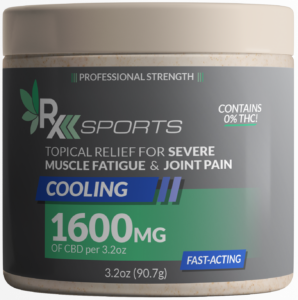
This is exactly why Rx Sports formulates its topicals, tinctures, and tablets as broad-spectrum: the goal is giving athletes the benefit of the fuller cannabinoid and terpene profile without the THC exposure that full-spectrum products carry. If you’re not subject to any testing, full-spectrum isn’t inherently dangerous. It’s a legitimate, legal product category. It’s just a different risk calculation depending on who you are and what’s on the line.
What to actually check on a label
“Broad-spectrum” on a label isn’t a guarantee by itself. The only way to know what’s actually in a bottle is a current Certificate of Analysis (COA) from a third-party lab, showing the full cannabinoid breakdown and confirming non-detectable or trace THC levels. Reputable brands post these publicly rather than making you ask for them. If a company can’t produce a recent COA for the specific batch you’re buying, that’s worth treating as a red flag regardless of what the label claims.
The practical answer
If you compete under any anti-doping code, NCAA, WADA, or a similar body , broad-spectrum or isolate products with verified non-detectable THC are the lower-risk choice, full stop. If you’re not tested and you’re mainly optimizing for how the product works for you personally, full-spectrum is worth trying, since some people do report a difference. Either way, the label claim matters less than the lab report backing it up.




No comment yet, add your voice below!